
How Mem0 Agno Integration is Reshaping AI Memory
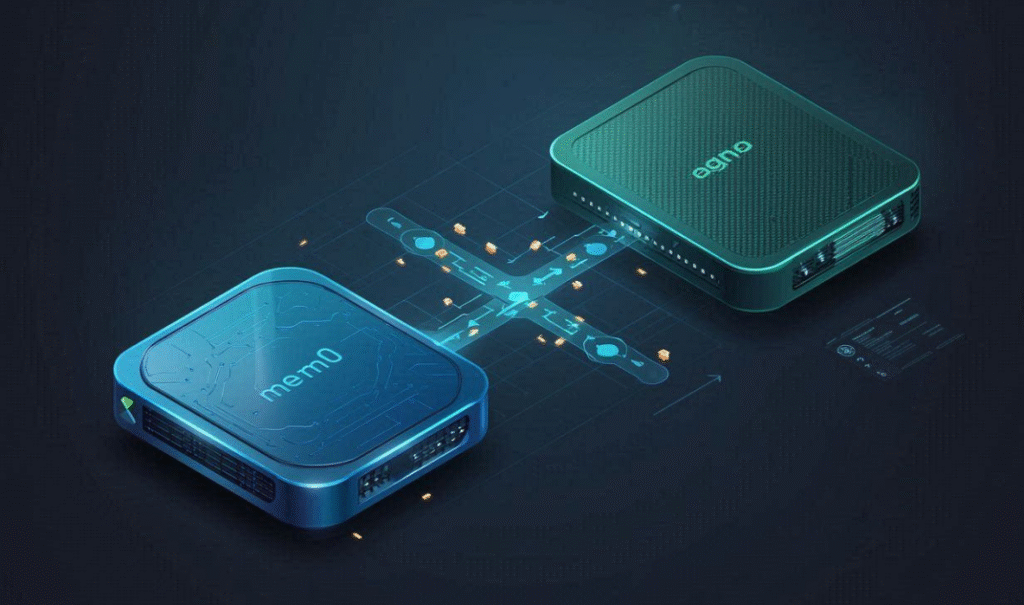
Today we are talking about mem0 agno integration. Strong memory frameworks and automation tools are now crucial in the rapidly developing field of artificial intelligence. Mem0 agno integration, which combines sophisticated memory procedures with intelligent agent-based operations, is crucial in this situation. AI systems can store, retrieve, and analyze data more efficiently in a seamless environment created by the integration. Organizations may improve decision-making, automate complicated activities, and create AI agents that learn from previous interactions by employing this strategy. Personalized answers and long-term information retention are all supported by this kind of integrated system. Mem0 combined with agno offers the scalability and dependability needed to optimize next-generation AI applications across a range of industries as companies embrace smarter technological solutions.
Why Mem0 Agno Integration Is Being Adopted by Developers for Intelligent Systems
In order to create AI agents with better contextual awareness and a stronger memory, developers are always looking for new technologies. Neural models may store information in structured formats and retrieve it promptly when needed thanks to mem0 agno integration, which provides the ideal option. Integrated agents retain long-term remember, which makes them significantly more effective than traditional systems that lose context after brief interactions. This makes it possible for apps to provide dependable, customized interactions over the course of days, weeks, or even months. Because the integration simplifies processes like knowledge indexing, data enrichment, and context injection, developers also gain from less complexity. A memory-rich agent system is crucial as AI-driven tools grow, which makes this combination framework the go-to option for contemporary AI development.
How Memory and Agent Tools Work Together to Enhance AI Performance
When automation skills and memory depth are combined, artificial intelligence becomes much more potent. The performance advantages immediately support the goal of memory agno integration, which improves how AI agents store and use data, even though its heading does not contain the keyword. Applications may now assess user behavior patterns, recall past discussions, and modify outputs depending on long-term history thanks to this unified methodology. Business intelligence, research workflows, and customer service automation all benefit from these characteristics’ increased accuracy and less redundancy. Businesses may create AI systems that function more like human assistants by combining memory tools with intelligent agents. These systems can learn, adapt, and develop with every new interaction.
Configuring Scalable AI Applications with Mem0 Agno Integration
Setting up real-time communication between memory modules and automation agents is necessary to implement mem0 agno integration. Once connected, the system allows structured recall during decision-making tasks by synchronizing stored data with the agent’s reasoning processes. When needed, this configuration guarantees that AI models can quickly access pertinent user preferences, history, or data. This connectivity is particularly advantageous for companies implementing extensive AI workflows, such as virtual assistants, analytics engines, or process automation bots. By establishing a centralized memory source, it also lowers operational complexity. This configuration’s scalability makes it appropriate for high-traffic settings where AI systems need to reliably handle dynamic inputs without sacrificing context or performance.
Improving Automation Processes Through Integrated Memory
When AI agents are able to recall previous activities and repurpose pertinent data, automation significantly improves. Despite without the term, this heading emphasizes the crucial result made possible by mem0 agno integration, which boosts operational effectiveness. Agents can keep track of progress, update logs, and preserve continuity during multi-step processes via memory-assisted task execution. This is particularly helpful in business settings where automated systems have to adhere to intricate processes over prolonged periods of time. For instance, long-term memory support is beneficial for technical troubleshooting sessions, document processing procedures, and customer onboarding duties. Additionally, agents can handle complex decision trees more correctly thanks to integrated memory tools, which guarantee that actions are consistent and in line with user requirements and organizational objectives.
How Personalized AI Interactions Are Supported by Mem0 Agno Integration
One of the most crucial elements of contemporary AI systems is personalization. By remembering user preferences, commonly asked questions, and past conversation history, AI agents may provide personalized responses using mem0 agno integration. Because users prefer to connect with technologies that comprehend their wants without needing constant explanations, this feature significantly increases customer happiness. Additionally, by strengthening contextual reasoning, the combined framework allows AI models to assess communication patterns, emotions, and intent over time. Personalization enabled by powerful memory technologies improves the user experience in chatbots, virtual assistants, and educational settings. Personalization will continue to be a major factor in adoption as companies continue to invest in cutting-edge AI technologies.
Conclusion
Mem0 agno integration, which combines intelligent agent capability with long-term memory capacities, is a significant advancement in AI development. Developers and businesses may create applications that are more intelligent, effective, and flexible thanks to this unified framework. Integrated AI agents provide continuous value across a variety of industries, including customer service, research, automation, and analytics, thanks to their enhanced context retention, sophisticated recall, and robust automation processes. Memor0 agno integration will be a key element of next-generation digital systems as the need for context-aware, tailored AI grows. Businesses may position themselves for long-term innovation, operational efficiency, and technological leadership in the rapidly changing AI world by investing in these tools now.