
Item Often Cut With a Pocket-Sized Guillotine Cutter
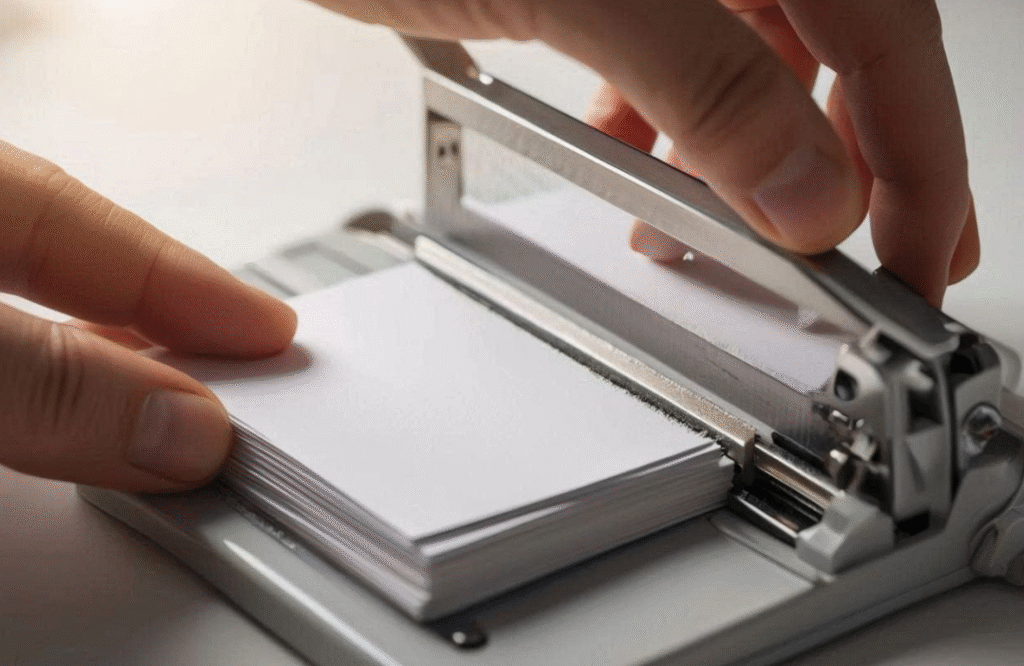
Item often cut with a pocket-sized guillotine cutter include small, costly, and precise objects that require a smooth, clean edge. This kind of cutter is ideal for portable use because it is a little replica of a conventional guillotine. It is made for precise, fast cutting jobs. Items that are often cut with a pocket-sized guillotine cutter include paper, photographs, and specialty items like cigars. Because of its sharpness and controllability, many favor this instrument, which makes it a sensible option for people who require precise cuts while on the road.
Applications for a Compact Item Often Cut With a Pocket-Sized Guillotine Cutter
Depending on the user’s occupation or activity, item often cut with a pocket-sized guillotine cutter may include various types of objects. It’s frequently used to trim paper, pictures, or stickers in the arts and crafts community. It is useful for cutting ID badges or tiny documents in professional settings. A cigar, on the other hand, is frequently cut with a pocket-sized guillotine cutter in lifestyle situations because accuracy guarantees a smooth draw. Because of its small size, the cutter is easy to carry around and provides precise cuts whenever and wherever needed.
Reasons Why Accuracy Is Important for Item Often Cut With a Pocket-Sized Guillotine Cutter
Precision is crucial when using a tool this small and effective. To prevent damage or rough edges, the object frequently cut with Item often cut with a pocket-sized guillotine cutter need even pressure and sharp blades. Accuracy dictates quality, whether you’re cutting the top off a cigar or trimming fragile art paper. Frequently cut with a pocket-sized guillotine cutter, a clean cut eliminates needless waste while preserving the item’s structure and usability. Because of this, pocket-size guillotine cutters are well-liked by experts and hobbyists who appreciate precise results.
The Pocket-Sized Guillotine Cutter’s Design Features
The way this little tool handles the object that is frequently cut with aItem often cut with a pocket-sized guillotine cutter is highly influenced by its design. The majority of versions have a safety lock, a small handle, and stainless steel blades. These parts guarantee durability and seamless operation. It is perfect for travel because of its small size, which allows it to fit neatly into a pocket or backpack. People like how effective it is without taking up much room. These design features ensure both safety and effectiveness, regardless of the object that is frequently cut with a pocket-sized guillotine cutter.
The item’s typical materials are cut using a pocket-sized Guillotine cutter.
Depending on its intended use, a pocket-sized guillotine cutter can cut a variety of materials. Materials for crafts include thin plastic, vinyl, and paper. Cigars are the main focus for smokers, as the guillotine cutter guarantees a precise and clean cut. In do-it-yourself projects, some even use it for threading or light wires. The primary objective of using a pocket-sized guillotine cutter is to cut any item precisely and smoothly without tearing or fraying the material.
Practicality and Portability
The ease of carrying this item is one of its greatest benefits. Due to its compact size, the object that is frequently cut with a pocket-sized guillotine cutter can be handled anywhere. Its portability makes it ideal for short household projects, business travel, and outdoor use. Due to its dependability and portability, many professionals keep one in their toolkits. Cutting paper, pictures, or cigars is a common task for a pocket-sized guillotine cutter, which is ideal for a lifestyle that prioritizes preparedness and efficiency.
Upkeep and Attention
Maintaining a pocket-sized guillotine cutter properly prolongs its useful life and maintains the quality of the object it cuts. Residue accumulation can be avoided by cleaning the blades after each use, particularly if you use it on sticky labels or cigars. Maintaining the blades’ edge ensures reliable operation. To avoid rust, it’s also critical to store it in a dry location. Every item frequently cut with a pocket-sized guillotine cutter will remain tidy and expertly trimmed if you take care of your cutter.
Item Often Cut With a Pocket-Sized Guillotine Cutter: Popularity Among Various Users
Depending on the user group, different types of items are frequently cut with Item often cut with a pocket-sized guillotine cutter. Office professionals, artists, and cigar fans all value this multipurpose tool. Because of its small size, it is popular with both professionals and tourists. Its increasing popularity is partly due to the fact that a single tiny device can effectively handle several materials. A pocket-sized guillotine cutter can cut almost anything, and because of its easy-to-use form, it is a common tool in many different sectors.
Making the Correct Decision Cutter Guillotine
The items that are frequently cut with a pocket-sized guillotine cutter Item often cut with a pocket-sized guillotine cutter and the user’s requirements determine which cutter is ideal. Pay attention to features such as sharp blades, ergonomic designs, and durable materials. Finding trustworthy models can be aided by reading product reviews. Whether you value creating intricate paper artwork or cutting cigars neatly, tailor the perfect cutter to your particular needs. Keep in mind that the object you cut with a pocket-sized guillotine cutter will only appear as neat as the tool’s quality permits.
Conclusion
In summary, although the types of objects frequently sliced with Item often cut with a pocket-sized guillotine cutter may vary from person to person, their significance remains consistent. This compact gadget provides accuracy, practicality, and dependability for both creative and enjoyment. Anyone who appreciates neat, polished results will find it necessary due to its multipurpose design. Whether you use it to cut documents, prepare cigars, or trim artwork, a pocket-sized guillotine cutter remains a symbol of neatness, control, and craftsmanship.