
What Type of Home Did the Atakapa Tribe Live In?
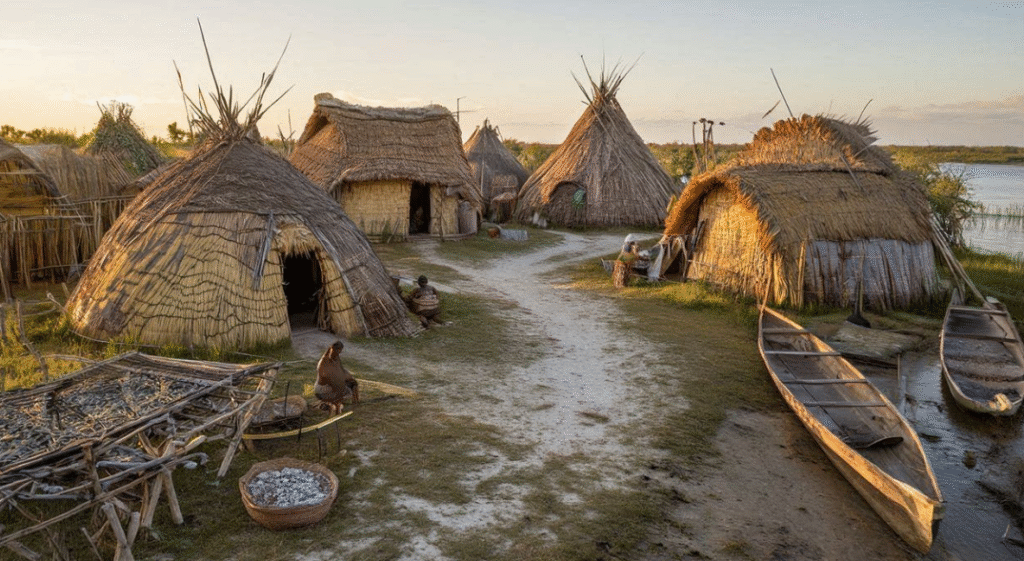
Understanding what type of home did the Atakapa tribe live in requires looking deeper into their daily lifestyle, surroundings as well as cultural identity. The Gulf Coast, which includes modern-day Louisiana and Southeast Texas, was home to the Atakapa, an Indigenous group whose construction methods were influenced by local hazards, weather patterns, and the natural resources that were accessible. Their communities demonstrated a strong bond with the earth as well as practicality. The majority of Atakapa villages were located close to lakes, rivers, and coastal marshes that provided a variety of food supplies, including fish, shellfish, and wild plants. Resilient, breathable, and easily repairable structures were required in this environment. They needed durable but temporary stone homes since they were a semi-sedentary tribe that relocated in accordance with seasonal needs. To really admire their architectural design, we must ask again: what type of home did the Atakapa tribe live in, and how did it support their way of life?
What Type of Home Did the Atakapa Tribe Live In: Building Materials and Construction Methods
While exploring what type of home did the Atakapa tribe live in, It becomes evident that practically all of the natural resources found in their marshy environs were used to construct their shelters. Reeds, branches, palmetto leaves, long grasses, cane, and wooden poles were all typical tools used by the Atakapa. These materials were ideal for building dome-shaped structures that were resistant to humidity and wind since they were lightweight and flexible. The first step in their construction process was to bury wooden poles in the earth in a circle. The poles were then strengthened with horizontal cane or bark strips, bent inward, and knotted firmly at the top. When the frame was finished, they covered the outside with woven mats or palmetto leaves to protect the interior from heat and rain. Families were able to ensure survival and comfort by repairing or rebuilding dwellings with little trouble due to the abundance of these materials.
Daily Function and Interior Layout of Atakapa Homes
Understanding what type of home did the Atakapa tribe live in also means examining how these structures were used in daily life. The Atakapa usually organized their living quarters around a central fireplace inside the dome-style houses. Cooking, heating in the winter, and defense against insects—which were prevalent in the Gulf region—all depended on this fire pit. Sleeping mats made of woven plant fibers were positioned around the boundaries of the small but well-organized houses. Tools, food, and ceremonial objects were stored in storage baskets. The low entryway decreased heat loss, and the circular form minimized cold patches and dispersed heat evenly. These dwellings were comfortable, adaptable, and useful for families despite their straightforward exteriors. The Atakapa’s profound awareness of communal living and environmental adaptation is reflected in their interior design.
What Type of Home Did the Atakapa Tribe Live In: Seasonal Adaptation and Mobility
The semi-nomadic nature of the Atakapa meant that their dwellings had to adapt to varying climates all year round. Their homes were designed to be portable, breathable, and easy to put together so they could migrate from summer fishing grounds along the coast to winter hunting grounds inland. The low dome shape helped lessen damage from high winds during storm seasons, particularly in hurricane-prone areas. Without suffering major long-term losses, the Atakapa could repair a structure using the same local resources if it was damaged by weather. This flexibility was essential for surviving in regions with erratic weather patterns. Additionally, because of their mobility, settlements might move based on the availability of food. This adaptability allowed the Atakapa to live without permanent stone dwellings or wooden lodges. Rather, they preferred houses that reflected their culture’s practicality by striking a balance between convenience and durability.
What Type of Home Did the Atakapa Tribe Live In: Cultural Meaning and Regional Variations
Atakapa dwellings had cultural importance in addition to providing basic shelter. The dome shape, which is frequently called a wickiup-style home in anthropological studies, represented intimacy and community cohesion. Villages were laid out in patterns, with residences encircling common areas used for rituals, meetings, and conversations. Atakapa groups varied by region, with inland groups depending more on cane and grass covers and coastal bands adopting more water-resistant materials like palmetto leaves. However, the fundamental design stayed the same: it was straightforward, dome-shaped, and constructed from natural materials. Long before sustainability became a global issue, these houses were examples of sustainable living. They fit in perfectly with the surroundings and had little effect on the environment. Historians can learn more about the Atakapa’s social structure, resourcefulness, and cultural priorities throughout generations by studying how they constructed, organized, and valued their dwellings.
Conclusion
Answering the question “what type of home did the Atakapa tribe live in” reveals much more than the structure itself—it opens a window into their lifestyle, adaptability, and respect for nature. The Atakapa lived in dome-shaped homes made from reeds, grasses, cane, wooden poles, and palmetto leaves. These dwellings were practical, weather-resistant, and ideal for a semi-nomadic people living along the Gulf Coast. Their homes reflected environmental wisdom, efficient design, and cultural identity. The repeated study of what type of home did the Atakapa tribe live in shows that their architecture was purpose-built for survival, mobility, and community life. Understanding these homes gives us deeper appreciation for Indigenous innovation and the unique ways the Atakapa tribe shaped their world using only the natural materials around them.